
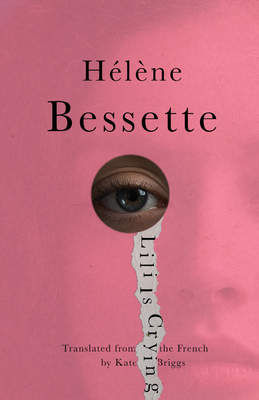
Description
Lili Is Crying, Hélène Bessette’s debut novel, conveys with singular force the fraughtness and depth of the troubling relationship between Lili and her mother, Charlotte. With a near-mythic quality, Bessette’s stripped-back prose evokes at once the pain of thwarted love–of desire run cold–and the promise of renewal. Lauded by critics on its initial 1953 publication for its boundary-pushing style, Lili Is Crying catapulted Bessette to cult status in France. The novel is moving and maddening in turns, with its characters trapped in their own cruelties and sorrows, but in its spareness and strength it feels true. “Show me a woman who’s chosen something.” Bessette’s books were hailed for their unusual economy of expression, rarity, strange humor, and sheer vivacity. She characterized her new kind of novel as “a freshly cut slice of life, whose force comes from its lack of commentary.”
Binding Type: Paperback
Contributors: Hélène Bessette,Kate Briggs (Translator),Eimear McBride (Introduction by)
Published: 07/22/2025
Publisher: New Directions Publishing Corporation
ISBN: 9780811239660
Pages: 192
Weight: 0.45lbs
Size: 0.60″ H x 8.00″ L x 5.20″ W
About the Author
Briggs, Kate: – Kate Briggs grew up in Somerset, UK, and is the translator of two volumes of Roland Barthes’s lectures and seminar notes: The Preparation of the Novel and How to Live Together, both published by Columbia University Press. This Little Art, her genre-bending essay on the art of translation, was published by Fitzcarraldo Editions in 2017. In 2021, she was awarded a Windham-Campbell Prize. Her debut novel, The Long Form, was published by Fitzcarraldo Editions in 2023 and shortlisted for the Goldsmiths Prize.Bessette, Hélène: – Hélène Bessette (1918-2000) published thirteen novels with Gallimard between 1953 and 1973, won the Prix Cazes in 1954, and was twice in the running for the Prix Goncourt and the Prix Médicis. After her editor Raymond Queneau’s death in 1976, her publisher ceased to support her. In 2000, she died in poverty and in poor mental health, with her body of work out of print and largely forgotten. It was only several years after her death that her singular articulation of what, with specific intent, she called “the poetic novel” found a new and avid readership in France.


Reviews
There are no reviews yet.